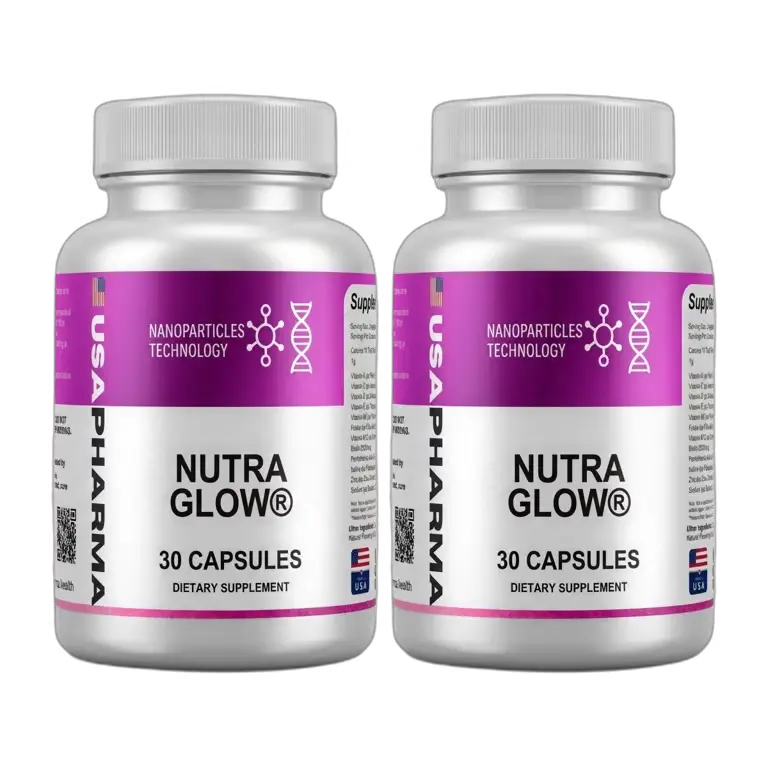
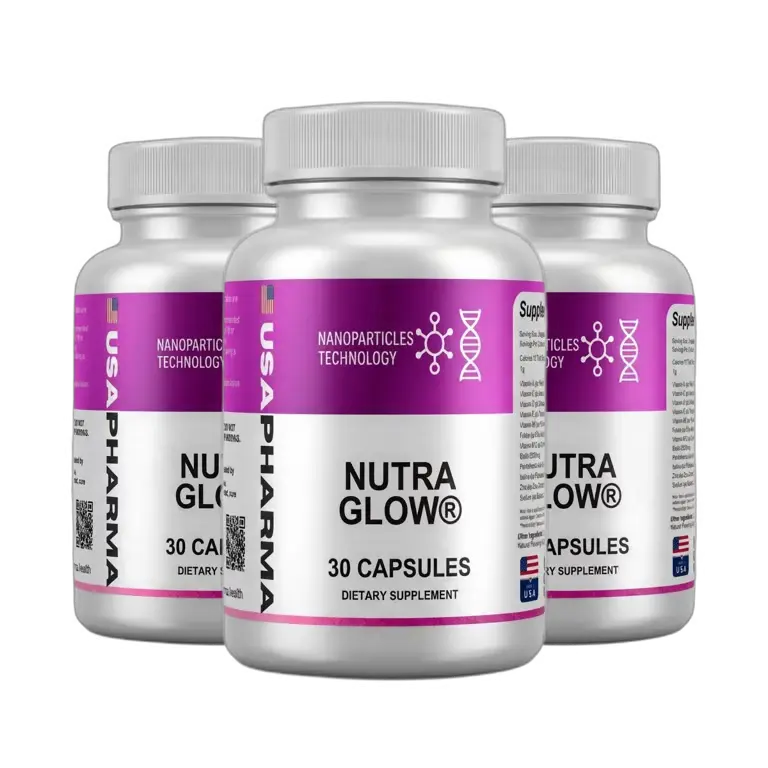
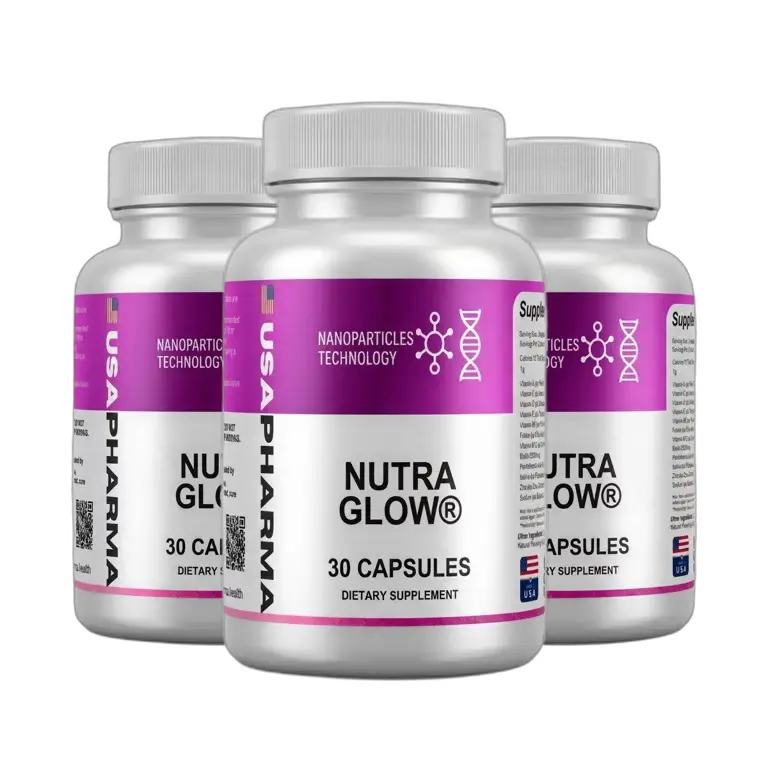
Seven Precision Ingredients
NutraGlow™ Key Ingredients
Every ingredient earns its place by performing a specific, evidence-supported role in skin transformation. No fillers. No marketing padding.
🐚
Hydrolyzed Marine Collagen
Marine collagen peptides are the most bioavailable collagen source available — absorbed up to 1.5x more efficiently than bovine-derived alternatives due to their smaller amino acid chain length. After absorption, these peptides serve a critical dual function: they directly supply glycine, proline, and hydroxyproline — the amino acid triplet that forms the triple-helix structure of collagen fibers — and they activate a receptor-mediated pathway in dermal fibroblasts that upregulates the cell's own collagen gene expression.
Multiple double-blind, placebo-controlled clinical trials have confirmed that daily oral collagen peptide supplementation produces measurable improvements in skin elasticity, hydration, and visible wrinkle reduction — making this the anchor ingredient of any serious evidence-informed beauty formula.
🍊
Vitamin C (Ascorbic Acid)
Vitamin C is the single most important cofactor in the collagen synthesis pathway. Without adequate vitamin C, the enzymes that catalyze the hydroxylation of proline and lysine — the reactions that create the cross-links giving collagen its tensile strength — cannot function. In practice, this means that even the most generous marine collagen supplementation will underperform without sufficient vitamin C present to complete the assembly process.
Beyond its structural role, vitamin C is a potent antioxidant that protects existing collagen fibers from oxidative degradation, inhibits melanin synthesis to improve skin tone evenness, and supports the epidermal immune barrier that protects against environmental skin damage.
💧
Hyaluronic Acid
Hyaluronic acid (HA) is the skin's primary water-retention molecule — a glycosaminoglycan that naturally exists in enormous quantities in the dermis of young skin. Its capacity to hold up to 1,000 times its own weight in water makes it the main reason young skin looks plump, dewy, and volumized. From the mid-twenties onwards, HA content in the dermis declines significantly, contributing directly to the loss of skin volume and the appearance of dryness, fine lines, and hollowness.
When taken orally in low-molecular-weight form, HA is absorbed through the intestinal epithelium and distributed systemically — reaching the dermal matrix via blood circulation to restore the moisture-binding capacity that declining endogenous HA production can no longer maintain.
⭐
Biotin (Vitamin B7)
Biotin's contribution to skin extends well beyond its popular reputation for hair and nails. It is an essential coenzyme for fatty acid synthesis — the metabolic process by which the skin constructs and maintains its lipid bilayer barrier. This barrier is responsible for preventing trans-epidermal water loss (TEWL): the passive evaporation of moisture through the skin surface that is the primary driver of dry, tight, and dull-looking skin.
Biotin also regulates keratinocyte proliferation and differentiation — supporting the healthy cellular turnover cycle that keeps the skin surface fresh, bright, and clear-looking rather than congested with dead cells that scatter light and create dullness.
🌅
Astaxanthin
Astaxanthin is a marine carotenoid and the most potent antioxidant identified in nature by specific assay measures — estimated at 6,000x the antioxidant activity of Vitamin C in singlet oxygen quenching assays and 550x that of Vitamin E in lipid peroxidation protection. Its structural advantage is unique: as a long-chain carotenoid, it anchors across the entire cell membrane, providing simultaneous protection on both the hydrophilic and lipophilic sides of every skin cell.
Clinical trials examining oral astaxanthin supplementation have documented improvements in skin elasticity, wrinkle depth, moisture content, and measurable protection against UV-induced photoaging — making it one of the most robustly researched ingredients in dermatological beauty science.
🍇
Resveratrol & Zinc Complex
Resveratrol activates SIRT1 sirtuins — longevity-associated intracellular proteins that regulate cellular stress response, suppress inflammatory pathways, and inhibit matrix metalloproteinases (MMPs): the enzymes that degrade existing collagen fibers. By simultaneously protecting new collagen from enzymatic breakdown and reducing the chronic low-grade inflammation that accelerates skin aging, resveratrol extends the functional lifespan of each collagen molecule your body produces.
Zinc completes the complex by regulating sebaceous gland activity (reducing excess sebum and breakouts), acting as a co-factor in over 300 enzymatic repair reactions including those governing wound healing and DNA repair, and providing essential antioxidant support through its role in superoxide dismutase enzyme systems that protect skin cells from oxidative damage.